

Blue Light Blocking Glasses | Red Lens
Default Title
£29.90
Skip to product information
5 left


New
Eso World
Blue Light Blocking Glasses | Red Lens
£29.90
New styles coming soon ✨
We're expanding our blue light blocking glasses collection with two new models featuring elegant gold metal frames. Please enquire for details or early availability.
---
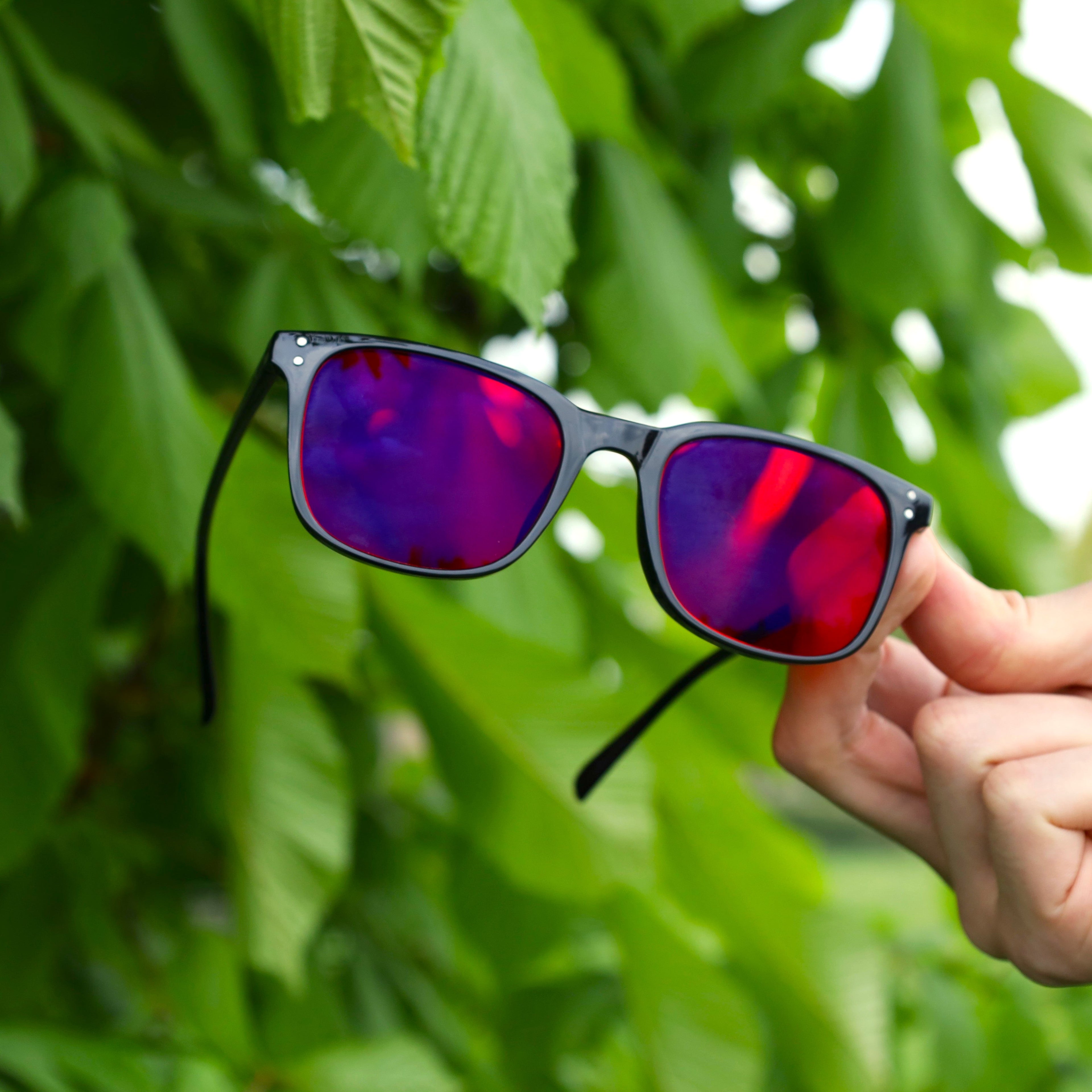
Red lenses that block 99.9% of blue light (400–530nm), paired with a lightweight BPA-free TR90 frame for comfortable evening wear.
Research suggests that melatonin production can begin to decrease with exposure to relatively low levels of artificial light (Zeitzer et al., 2000). Modern LED screens emit a significant amount of blue light in the 460–480nm range, the wavelengths most closely associated with melanopsin receptors involved in regulating the body's sleep-wake cycle. While many clear or lightly tinted "blue light" glasses filter only a small proportion of this spectrum, these red lenses are designed to block 99.9% of blue light between 400–530nm, matching the lens specifications used in several sleep-focused clinical studies.
Specifications
- Lens: Red, blocks 400–530nm blue light
- Frame: TR90 (BPA-free)
- Blue Light Filtering: 99.9%
- Weight: Approximately 25g
Materials
-
TR90 Nylon (~70%) — Frame
The frame is made from lightweight, flexible TR90 nylon, a durable BPA-free thermoplastic widely used in premium eyewear for its comfort and resilience. -
Red Polycarbonate Lens (~25%) — Lenses
Optical-grade red polycarbonate lenses designed to filter 99.9% of blue light across the 400–530nm wavelength range while maintaining optical clarity. -
Stainless Steel Hinges (~5%) — Hinges
Durable stainless steel hinges provide long-lasting performance without relying on plastic joints.
Key Features
- Red lenses designed to block 99.9% of blue light between 400–530nm.
- Based on the wavelength range used in published clinical sleep studies.
- Lightweight TR90 nylon frame that is BPA-free and comfortable to wear.
- Intended for use 1–2 hours before bedtime rather than throughout the day.
- Suitable for reducing blue light exposure from tvs, phones, tablets, laptops, televisions and LED lighting,l.
- Ideal when flying or travelling via train late at night when bright lights are used.
- Red polycarbonate lenses with colour built into the material rather than surface-applied dyes.
- Durable stainless steel hinges for everyday use.
How to Use
-
Wear them 1–2 hours before bed or at airports during night time travel.
For best results, put the glasses on during the final hour or two before you plan to sleep or when spending time in places with bright white light at night. -
Keep them on while using screens
Use them when watching television, using your phone, working on a laptop or spending time under bright LED lighting. -
Expect a red-tinted view
Colours will appear noticeably red while wearing the glasses. Most people adapt to this within a few minutes. -
Remove them when you're ready to sleep
Once you're heading to bed, take the glasses off and keep your sleeping environment as dark as practical. - Do not use when driving or operating heavy machinery.
Frequently Asked Questions
Do blue light blocking glasses actually work?
They can, provided they block the right wavelengths. Research has shown that lenses filtering the blue light spectrum used in clinical studies may help support better sleep quality (Burkhart & Phelps, 2009). Many clear or lightly tinted blue light glasses filter only a small proportion of blue light, whereas these red lenses are designed to block 99.9% of blue light between 400–530nm.
Why choose red lenses instead of yellow or clear?
The retinal photoreceptors involved in regulating melatonin are most sensitive to blue light around 460–480nm. Clear and yellow lenses typically reduce only part of this range, while red lenses provide much broader filtering across the wavelengths commonly used in sleep-related research. Studies using amber and red-spectrum lenses have reported improvements in sleep quality and evening melatonin production.
When should I wear them before bed?
For best results, wear the glasses around 1–2 hours before your planned bedtime. This gives your body time to reduce blue light exposure during your evening routine, whether you're watching television, using your phone or working on a computer.
Can I wear them during the day?
These glasses are intended for evening and night time use rather than all-day wear. Exposure to natural blue light during daylight hours plays an important role in supporting normal circadian rhythm, alertness and daytime energy levels.
Will they cure insomnia?
Blue light blocking glasses are not a treatment for insomnia. However, if difficulty sleeping is linked to evening screen use or excessive artificial light exposure, reducing blue light before bed may help improve sleep quality. Sleep difficulties caused by medical conditions, stress or other factors may require different approaches.
Are they better than using Night Shift or screen filters?
Built-in screen settings such as Apple Night Shift, Android Night Light and similar software reduce some blue light, but they do not eliminate it completely. Because these glasses filter light after it leaves the screen, they can be worn while using multiple devices or under LED room lighting without needing to adjust individual settings.
Are they safe for my eyes?
Yes. The lenses simply filter selected blue wavelengths from visible light and do not emit any light themselves. Research has also explored whether reducing blue light exposure may help support long-term retinal health (Tosini et al., 2016).
Can I wear them over prescription glasses?
These are standard-sized glasses rather than over-glasses. If you normally wear prescription eyewear, you may wish to consider clip-on filters or prescription lenses with equivalent blue light filtering from your optician.
Research
-
Burkhart K & Phelps JR (2009). Chronobiology International
This randomised controlled trial found that amber-tinted lenses designed to filter blue light improved both sleep quality and mood in people with insomnia. Participants wearing lenses that blocked wavelengths below 530nm experienced earlier melatonin onset and reported better sleep than those wearing clear control lenses. -
Chang AM, Aeschbach D, Duffy JF & Czeisler CA (2015). Proceedings of the National Academy of Sciences
Researchers found that using LED eReaders before bedtime reduced melatonin production, delayed the body's circadian rhythm, increased the time it took participants to fall asleep and reduced alertness the following morning when compared with reading printed books. The effects became more pronounced with greater evening screen exposure. -
Cajochen C, Frey S, Anders D, Späti J, Bues M, Pross A, Mager R, Wirz-Justice A & Stefani O (2011). Journal of Applied Physiology
In this controlled crossover study, LED-backlit screens reduced melatonin production by around 55% compared with non-LED displays. The researchers identified the strongest effects within the 460–480nm wavelength range and also observed increased cognitive alertness following LED screen exposure. -
Shechter A, Kim EW, St-Onge MP & Westwood AJ (2018). Journal of Psychiatric Research
Participants with insomnia and bipolar disorder who wore amber-tinted blue light blocking glasses for two hours before bed over seven consecutive evenings reported meaningful improvements in both sleep quality and mood, providing further evidence for reducing evening blue light exposure. -
Tosini G, Ferguson I & Tsubota K (2016). Molecular Vision
This review examined how prolonged exposure to blue light may contribute to retinal stress through photochemical processes, particularly within the 415–455nm wavelength range. The authors discussed reducing unnecessary blue light exposure, especially during the evening, as one strategy that may help support long-term eye health.
Any Questions?
If you have any question about this product please do not hesitate to contact us.